How You Can Fix It Before Year-End?
For many growing businesses, AWS usage scales quickly — new workloads, more traffic, additional environments, more data. Everything works smoothly… until the month-end invoice arrives.
The Real-Life Trigger
Your business grows → cloud usage expands → but visibility stays the same.
And suddenly, you’re hit with a bill that’s 20%, 40%, sometimes even 60% higher than expected.
We see this every week.
At Operisoft, after completing 300+ AWS account assessments, one truth is clear:
Most companies don’t overspend on AWS intentionally — they simply lack visibility, governance, and optimization.
But the best part?
These issues are fixable, often within days.
Let’s break it down.
Why AWS Bills Increase — The Hidden Cost Drivers
Most organizations spend 20–40% more on AWS than necessary. And the reasons are surprisingly common:
- Unused & Idle Resources
- Resources running without purpose, consuming cost without delivering any value.
- Over-Provisioning
- Infrastructure sized far beyond actual requirements, leading to unnecessary expenses.
- No Tagging or Inconsistent Tagging
- Lack of proper resource tagging, making cost tracking, ownership, and optimization difficult.
- Inefficient Architecture
- Poorly designed infrastructure that impacts performance, security, and cost-effectiveness.
- Zero Cost Monitoring
- No budgets or alerts configured, resulting in uncontrolled and unpredictable AWS spending.
Case Study: How We Secured and Optimized a Customer’s AWS Infrastructure
Problem Statement
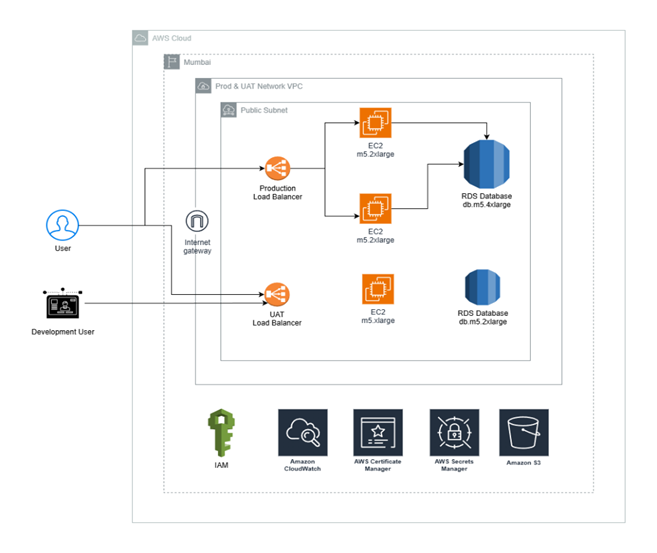
A customer, “Anonymous,” came to us with major issues in their AWS setup. Their costs were very high, security was weak, and performance was poor. The architecture was over-provisioned, not scalable, and even exposed to DDoS attacks, leading to downtime. They asked us to help reduce unnecessary costs and build a secure, scalable setup – and were ready to invest in a long-term, efficient redesign.
Our Assessment
We performed a full Cost and Security Assessment. We checked where money was being wasted, found security gaps, and reviewed their overall architecture. We identified issues in environment separation, network/subnet planning, monitoring, security controls, and instance sizing.
Solution & Recommendations
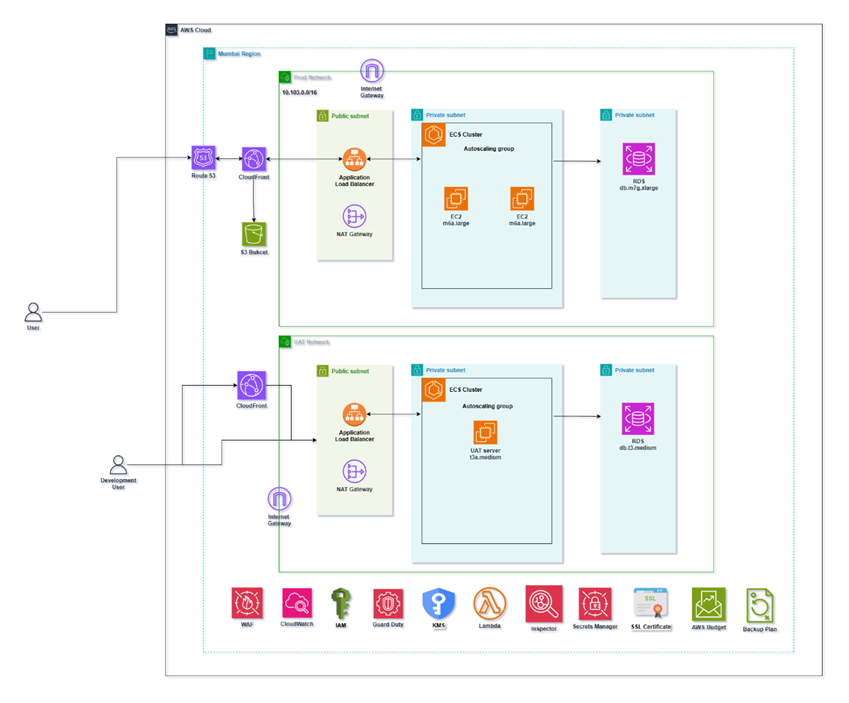
We recommended a complete redesign following AWS best practices. We separated Prod and UAT, shifted EC2 and RDS to private subnets, and added AWS WAF for DDoS and app-level protection. CloudFront was added to cut data transfer costs. Auto Scaling was enabled for flexibility, CloudWatch for monitoring, and backups were set for EC2/RDS. We also configured AWS Budgets for cost alerts. UAT servers were automated to shut down after hours to save additional monthly cost.
Business Impact
- Improved security and reduced attack exposure
- Improved scalability of applications
- Unnecessary cost has been decreased and improved new design architecture where cost is on actual usage
- Improved security and reduced attack exposure
- Better monitoring and operational visibility
- Architecture ready for future scaling
Conclusion:
| Category | Old Architecture | New Architecture | Improvement (%) |
| Cost Efficiency | High cost, oversized | Optimized, auto-scaling, reduced size | 35–45% better |
| Security | Weak, public exposure | WAF, CloudFront, private subnets, GuardDuty, KMS | 50–60% better |
| Scalability | Fixed capacity, no scaling | Auto Scaling + ECS + caching | 40–55% better |
| Operational Visibility | Minimal | CloudWatch, Logs, Budgets | 45–50% better |
By redesigning the architecture with AWS best practices, we achieved:
- 35–45% reduction in monthly AWS costs
- 50–60% improvement in security posture
- 40–55% better scalability and performance
The new environment is secure, scalable, cost-optimized, and ready for future growth.
Before Operisoft Architecture:
After Operisoft Architecture:
How Brings Visibility, Control & Optimization
We combine AWS-native tools, deep analysis, and our Optimization Framework to turn chaos into clarity.
Step 1: Rapid Visibility Assessment
Step 2: Implement a Smart Tagging Strategy
Step 3: Optimization Workshops with Your Team
Step 4: Continuous Governance & Review
Summary:
High AWS costs and security gaps usually happen when growth moves faster than visibility. The issue is not cloud adoption, but the lack of clear controls, cost management, and continuous monitoring.
With the right AWS assessment and optimized architecture, organizations can lower costs, improve security, and boost performance together. Cloud optimization is about making informed decisions, not reducing capability.
By shifting from reactive troubleshooting to proactive governance, businesses stay in control of their cloud environment.
Operisoft helps organizations gain visibility, predict costs, and scale securely — without surprises on the monthly bill.